|
Getting your Trinity Audio player ready...
|
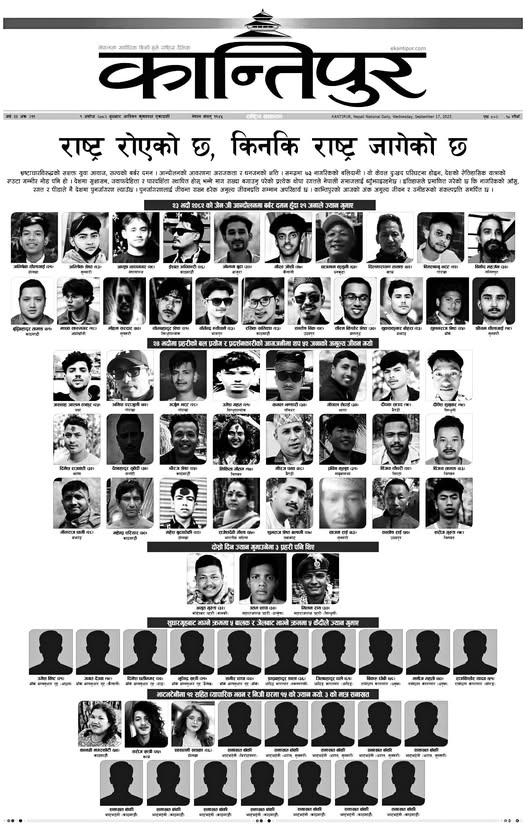
Kathmandu: The interim government has formally recognized those killed in last week’s Gen Z uprising as “martyrs,” pledging financial compensation for their families and declaring a national day of mourning on September 17. The announcement comes as the country grapples with the aftermath of one of the deadliest protest movements in its recent history.
As per the official figures, at least 72 people lost their lives in the nationwide demonstrations led by Generation Z activists against corruption and restrictions on online freedom. Hundreds more remain hospitalized across the country. Clashes between protesters and security forces turned violent across major cities, leaving hospitals overwhelmed and raising urgent questions over the state’s use of force.
Following its first meeting since Prime Minister Sushila Karki assumed office on September 12, the Cabinet approved a relief package of 1.5 million rupees (approximately USD 11,000) for each bereaved family. The sum includes one million rupees in direct compensation and an additional 500,000 rupees to cover funeral and related costs.
Talking to the media after the Cabinet’s meeting, Home Minister Om Prakash Aryal said the government would also bear the cost of transporting the bodies to their hometowns, including by air for those from remote districts.
“This government will honor their sacrifice,” Home Minister Aryal said. “Their funerals will be conducted with national dignity, and their families will not be left alone in this tragedy.”
In addition, September 17 has been declared a national day of mourning, during which the flag will be flown at half-mast, he informed. Medical treatment for the wounded will continue to be provided free of charge in public hospitals, he informed.
The Cabinet also endorsed the creation of a judicial inquiry commission, to be led by a former Supreme Court justice, to investigate the circumstances that led to the deaths during the protests.
In a symbolic gesture, Aryal also revealed plans for a “Gen Z Awakening Memorial Park” to commemorate the fallen, though a site has yet to be finalized.
The decision carries both symbolic and political weight. By naming the deceased “Gen Z martyrs,” the government is acknowledging the role of the movement that helped topple the previous administration and usher in Karki’s premiership, the first for a woman in Nepal’s history.
Meanwhile, Nepal Police announced that families of officers killed during the unrest would each receive one million rupees, financed through deductions from the salaries of personnel across all ranks.