|
Getting your Trinity Audio player ready...
|
Kathmandu: When Sushila Karki raised her hand and took the oath of office on13 September, history shifted in Nepal. At 73, the former chief justice of the Supreme Court has become the country’s first female prime minister — not through the slow grind of electoral politics, but in the aftermath of one of the deadliest waves of unrest Nepal has seen in decades.
Her appointment followed weeks of anti-corruption protests led largely by young Nepalis, the so-called “Gen Z movement,” who transformed anger over a government ban on social media into a nationwide uprising. More than 50 people were killed in clashes with riot police. Parliament and several ministries were torched in Kathmandu. Prime Minister KP Sharma Oli resigned under mounting pressure, leaving a power vacuum that protesters refused to let the old guard fill.
It was in this vacuum that Karki’s name surfaced. Protest leaders demanded someone outside the corrupt political establishment. After days of negotiations involving the president, senior judges, army officials, and youth leaders, a rare consensus emerged: Sushila Karki, a figure associated with integrity, impartiality, and fearlessness.
One of the protesters who sat in talks with the president said:
We wanted someone who could stand above party games. Karki symbolizes fairness. People trust her in a way they do not trust the politicians.
A Judge Who Took on Power
Karki is not new to firsts. In 2016, she became Nepal’s first female Chief Justice. Her tenure was marked by landmark corruption rulings and clashes with powerful interests. She earned a reputation for independence, but also attracted controversy for refusing to bow to political pressure.
Educated in political science at Banaras Hindu University in India, she carved her career through Nepal’s courts during a period of enormous political upheaval. Colleagues describe her as soft-spoken yet uncompromising. “She listens carefully, but once she makes up her mind, she doesn’t flinch,” said a retired Supreme Court colleague, who chose to remain anonymity, said.
The Mandate: Peace, Justice, Elections
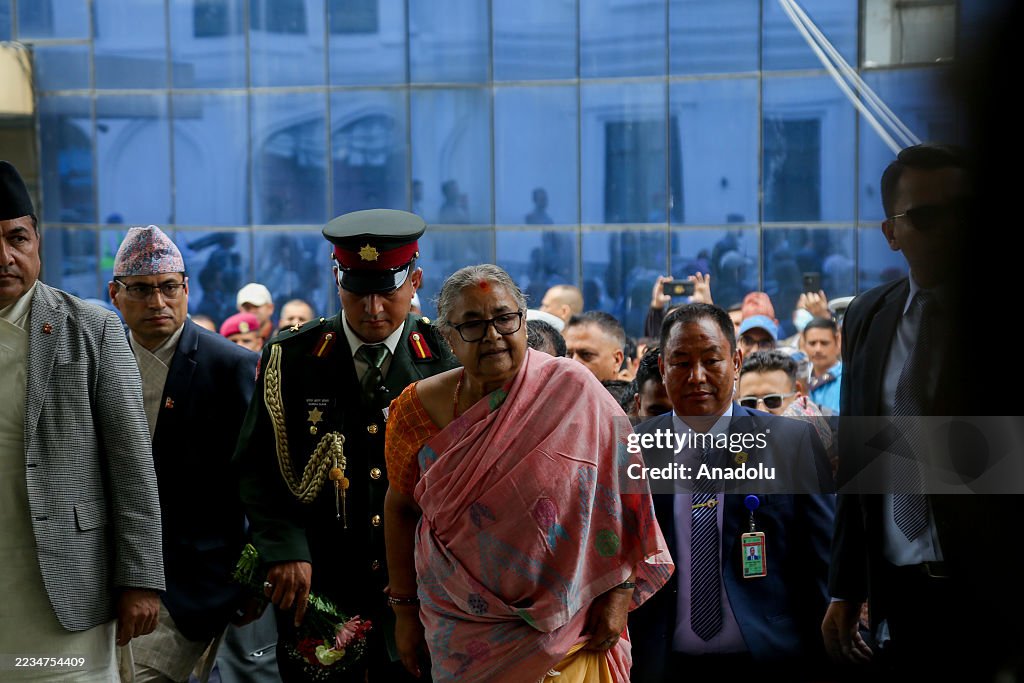
Karki takes office not as a long-term leader but as head of a six-month interim government tasked with restoring order and preparing the country for elections, now scheduled for 5 March 2026. Her mandate, agreed with protest leaders and President Ram Chandra Poudel, has four urgent pillars:
- Ensure Justice: Investigate the killings during protests, compensate victims’ families, and hold accountable those who gave shoot-to-kill orders.
- Fight Corruption: Begin cleaning out entrenched patronage networks and signal that impunity will not continue.
- Restore Trust in Government: Deliver public services without favoritism, reduce bureaucratic bottlenecks, and set a new tone for governance.
- Guarantee Elections: Oversee a credible vote within the constitutional timeframe.
Her early moves reflect this focus. She announced compensation packages for families of those killed and declared them “martyrs of democracy.” She has instructed ministries to publish emergency audits of spending. And she has made clear that she does not seek to alter Nepal’s political system, talking to the journalists.
My duty is not to rewrite the constitution, but to uphold it until the sovereign people elect a new parliament.
Obstacles on the Road Ahead
Yet, delivering these promises will be anything but simple. Karki governs without a parliament. Her cabinet choices must balance the demands of youth activists with pressure from established parties. The bureaucracy she inherits is deeply politicized, and entrenched interests are likely to resist reforms.
Mohna Ansari, former commissioner at the National Human Rights Commission cautioned:
An interim administration can calm the streets, but it cannot remake the system. Young people are demanding sweeping change, yet the authority Karki holds is confined to a very limited constitutional mandate.
There are also practical constraints: Nepal’s economy is reeling from the unrest. Tourism has collapsed, investors are nervous, and government coffers are stretched. Paying compensation to families, repairing burned government buildings, and stabilizing inflation will test her short-term capacity.
Symbolism and Stakes
Even if her tenure lasts only until the next election, Karki’s rise has already altered Nepal’s political imagination. For the first time, a woman holds the top executive post — something many assumed might take decades longer.
Her leadership also carries symbolic weight for the Gen Z movement that propelled her forward. 21-year-old protester Krishna Gautam told us:
It was never only about replacing the prime minister. What we want is a different culture of politics altogether. Karki’s clean record gives us some hope, but our trust will depend on what she actually delivers.
Whether that hope turns into lasting change will depend on what comes next. If she can hold credible elections, ensure justice for protest victims, and show visible progress against corruption, she may reset public expectations of government. If she fails, disillusionment could deepen — and Nepal risks sliding back into unrest.
Cautious Optimism
Sushila Karki steps into office not with sweeping powers, but with extraordinary symbolic legitimacy. She is the bridge between a generation that no longer trusts the old political order and an electoral future that is still uncertain.
Her clean image, moral authority, and judicial independence give her an advantage. Yet, she must walk a tightrope: enforce accountability without destabilizing fragile institutions, comfort grieving families without draining state resources, and deliver an election that is both free and trusted.
In the words of youth leaders who actively participated in the Gen Z protest, in a conversation with Public Press.
She cannot change everything. But she can prove that leaders don’t have to be corrupt. That alone will be a revolution.
